

From the Atlantic forests of the north to the limestone mountain ranges of the southeast, passing through archipelagos that seem designed for evolution, our country gathers a biological diversity unique in Europe. However, this richness coexists with a growing shadow. Every year, new species enter the red list, and others see their populations recede without us barely noticing.
When one traverses Doñana at dawn or the Cantabrian mountains at the end of summer, one feels that Spanish nature continues to beat strongly. Even so, one only has to look at the latest official reports to understand that this heartbeat is increasingly fragile. Human pressure, climate advancement, and uneven management have pushed numerous animals in danger of extinction in Spain to a limit that forces us to rethink how we coexist with them.
The paradox is that we are a biodiverse country but also highly transformed. Roads, scattered urban developments, intensive irrigation, recurrent wildfires, and rural abandonment leaving forests unmanaged are pieces of the same puzzle. That is why, when we talk about threatened species, we are not talking about an isolated problem, but the symptom of a model that needs a profound shift if we want the future to continue having wings, claws, and fur.
The causes pushing our species to the limit
Many field biologists, for magazine reports or documentaries, tend to repeat a phrase over and over again:
“No species goes extinct due to a single cause.”
And it is true. The decline of fauna in Spain draws a complex mosaic where several factors act simultaneously.
Habitat loss is perhaps the most evident driver. We can see how marshes dry up, pine forests are converted into housing developments, or rivers are transformed into lifeless canals, causing many animals to lose their living space. This transformation of the landscape does not happen all at once; it happens like a silent erosion that trims away territory year after year.
Added to territorial pressure is a climate that changes too quickly. Heatwaves, long droughts, and increasingly irregular winters alter feeding and breeding cycles. I have seen dry rivers in summer that ten years ago maintained a steady flow until September. In those same canyons nested birds that today seek cooler areas or die trying.
Another silent ingredient in the extinction of animals in Spain is the presence of invasive species. American minks, foreign otters, giant catfish, or tropical mosquitoes compete with, sicken, or displace local species that do not have time to adapt. When you travel across a reservoir and see entire schools of exotic fish, you understand that invasion is not an abstract concept, but a palpable reality.
And on a more human level, illegal hunting, poisoning, and roadkill remain a persistent threat. Although society is more aware, cases are recorded every year demonstrating that there is still a long way to go to completely banish practices that should not exist in the 21st century.
Endangered animals in Spain
Spain has been the cradle of some of the most impressive recovery stories in Europe. However, these victories should not hide the fact that the battle continues.
Currently, the country harbors around 85,000 species, representing 54% of species in Europe. However, 14% of the species present in Spain are threatened at the European level, according to the latest Red List conducted by the IUCN.
Below, we bring you some of the most representative endangered animals in Spain:
Iberian Lynx, the golden ghost of the Mediterranean forest
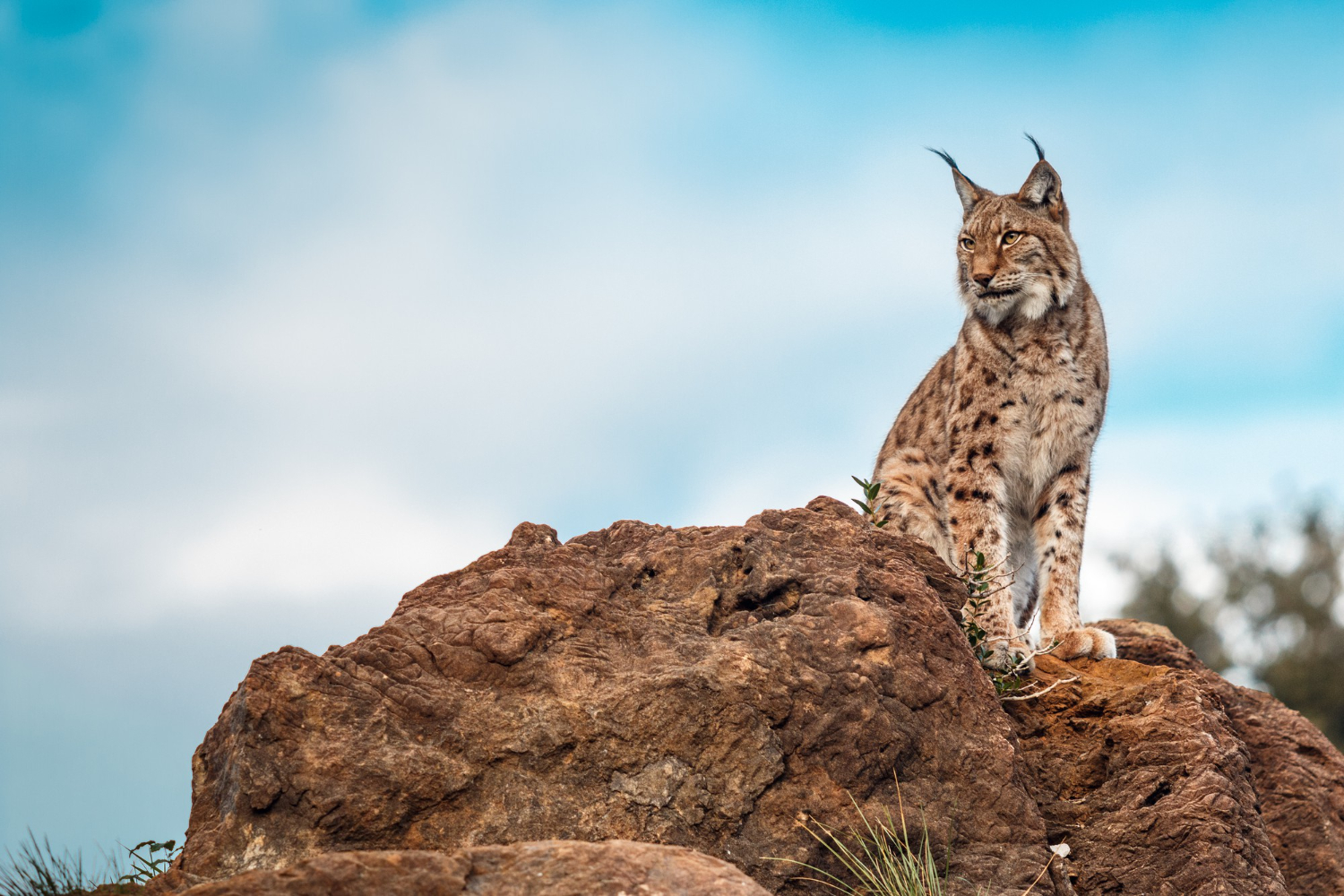
Anyone lucky enough to see a free Iberian lynx knows it is a moment that stays engraved forever. The first time I encountered one was in Sierra Morena, almost at dusk. That amber glow in its eyes and the stealth with which it disappeared among the rockroses explain on their own why it is a national symbol.
For years it was the most threatened feline on the planet. Its dependence on rabbits, fragmentation of the forest, and road accidents pushed it to the brink of the abyss. Captive breeding programs and habitat improvement have managed to grow the population, but it remains part of the group of animals in danger of extinction in Spain. Every individual counts, every litter is celebrated, every dangerous road is identified as a priority.
Spanish Imperial Eagle, the silent queen of the sky
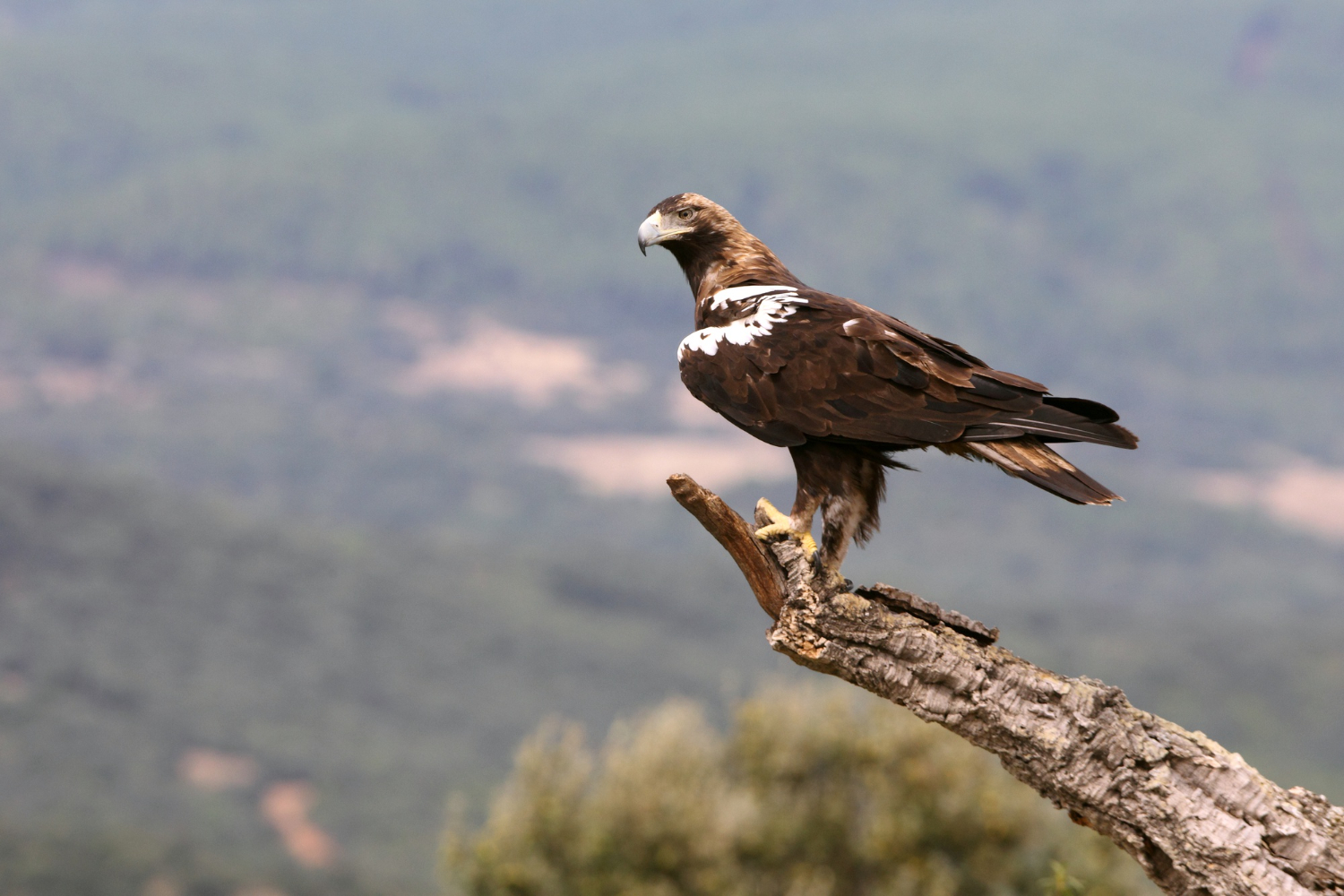
Flying beneath a Spanish imperial eagle is an experience that impresses even those who have spent years in the field. It is a majestic bird, extremely territorial and sensitive to any change. Its problems are not new, as we see news about electrocutions, loss of nesting areas, and a rapidly changing food chain. Although it is improving little by little, it continues within the framework of threatened species, with constant surveillance over every breeding pair.
Cantabrian Brown Bear, a stubborn survivor
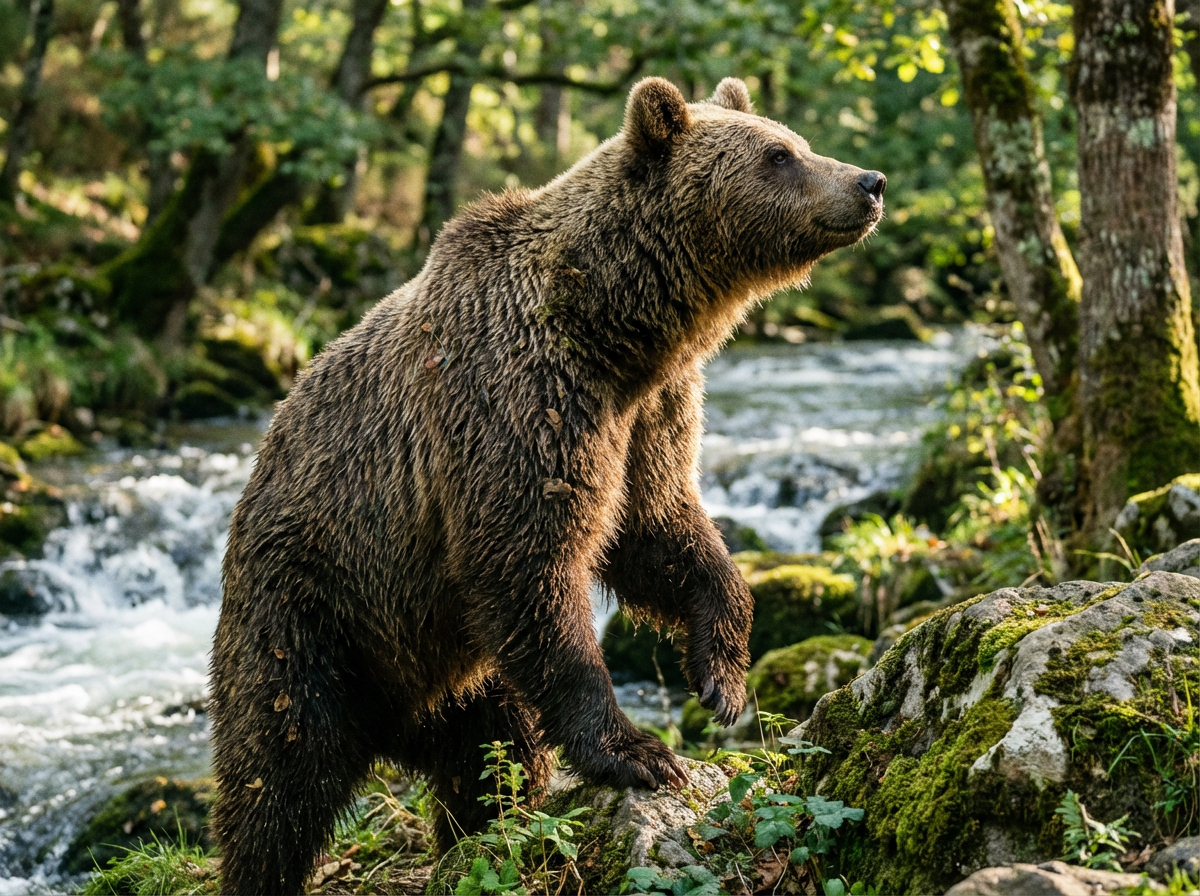
In the forests of the Cantabrian Mountains, traces of the bear are a reminder that there are still territories where nature prevails. Seeing its fresh print on the mud of a beech forest is like discovering an ancestral signature. But its recovery is slow and fragile. The disconnection between populations, the lack of food in some valleys, and human impact threaten its expansion. Although it is no longer in as critical a situation as decades ago, its future depends on our ability to ensure corridors that allow their territories to unite.
Bearded Vulture, the bird that makes silence its fortress
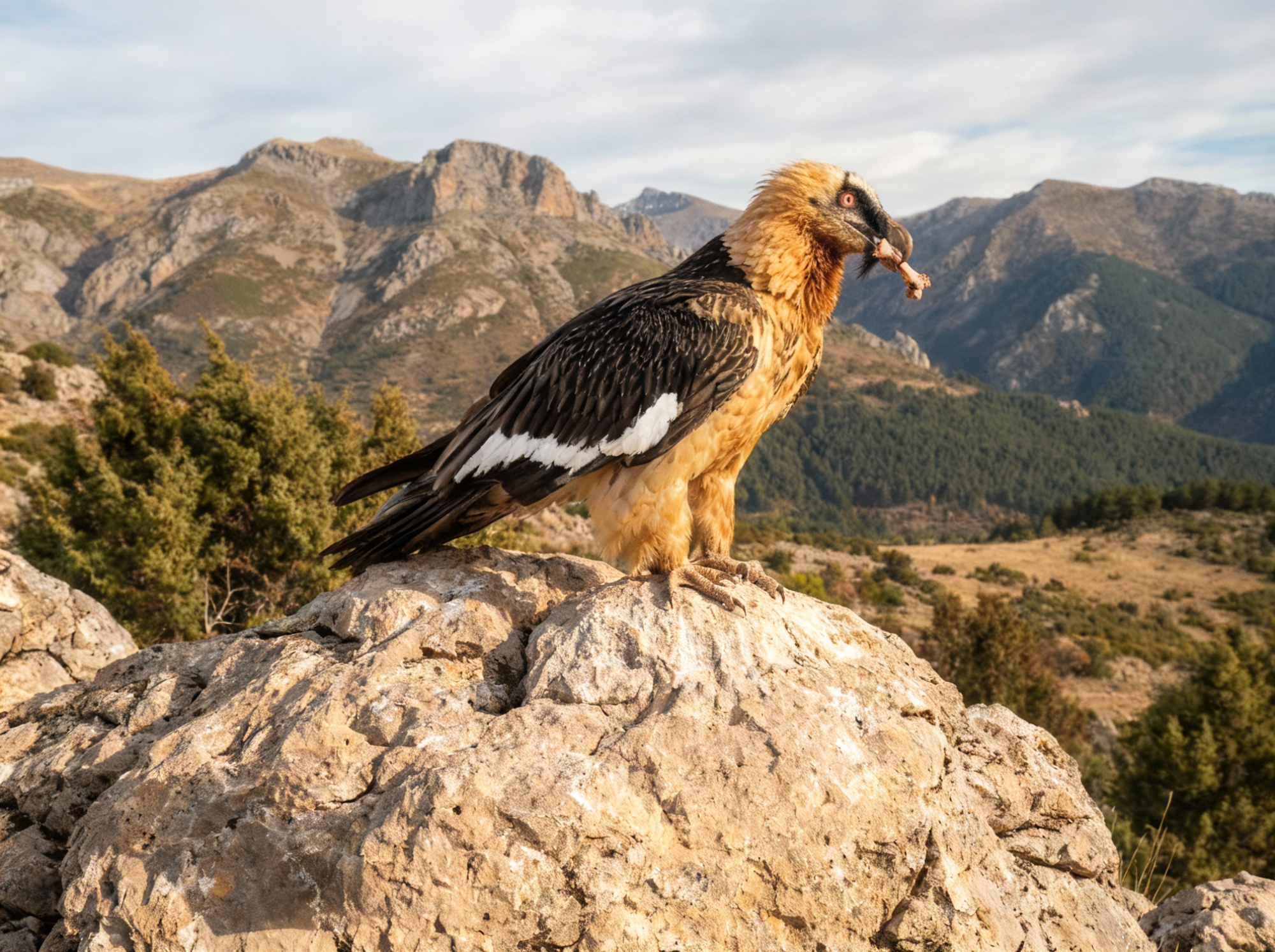
In the Pyrenees, the bearded vulture draws perfect circles while searching for bone remains to drop from great heights. It is an almost prehistoric technique. The recovery in the Pyrenees has been one of the most hopeful stories, but its presence in other mountain ranges, such as Cazorla or Sierra Nevada, is still reduced. Any poisoning or loss of juvenile specimens puts decades of work at risk.
Capercaillie, the ghost of the Atlantic forest
If there is an animal whose disappearance feels especially painful, it is the Cantabrian capercaillie. It is a shy species, linked to mature forests that are disappearing or becoming isolated from one another. The first time I was told what a “cantadera” (singing ground) was like, I understood why so many ornithologists dedicate their lives to it. Today so few remain that every recovery attempt is almost a race against time.
Marine fauna also agonizing far from the spotlight
When we think of endangered animals in Spain, we usually imagine Mediterranean scrublands or Atlantic forests. However, a good part of our threatened biodiversity lives underwater. In the islands and on our peninsular coasts, many marine species are going through a critical moment, although they rarely occupy headlines.
The Spanish Mediterranean, for example, has lost entire meadows of Posidonia, which are authentic underwater forests where fish, octopuses, and seahorses take refuge. On my visits to Formentera or Cabrera, I was able to verify an evident difference between protected zones and degraded areas. Where the Posidonia remains dense, the water seems cleaner and full of life. When it disappears, the bottom becomes a desert.
Among the threatened species of the sea stands the loggerhead turtle, which finds it increasingly difficult to nest due to beaches saturated with artificial light and boats. There is also concern about the state of various species of rays and sharks suffering from historical fishing pressure. They are slow animals, with long reproductive cycles, and any decrease in their numbers is noticed almost immediately.
Even emblematic mammals like the bottlenose dolphin have seen how pollution and underwater noise alter their traditional routes. In the Canary Islands, the sperm whale clashes with a similar problem, because although there is a vibrant ecosystem, it is subjected to increasingly intense maritime traffic. The sound of engines may seem insignificant to us, but in the ocean’s acoustics, it is a maze that confuses, stresses, and sometimes kills.
These examples show that marine conservation needs as much attention as terrestrial conservation. And that to protect the sea, it is not enough to look at the water; we must also watch what we throw into it.
Other endangered animals
While the struggle for the Iberian Lynx or the Cantabrian Brown Bear captures public attention and resources, the reality of Spanish biodiversity is that a broad spectrum of less visible fauna also faces limit situations. These groups, which often include endemic species with very reduced geographic distributions, fight silently against the degradation of their habitats, pollution, and the pressure of invasive species.
Below is a summary of species with a high degree of threat (CR, EN, VU) in Spain that had not yet been detailed:
| Species Group | Species (Scientific Name) | Threat Category | Situation Summary |
| Reptiles
(Lacertids) |
La Palma Giant Lizard
(Gallotia auaritae) |
Critically Endangered
(CR) |
Island endemism. Threatened by the restriction and continuous decline of its habitat (less than 1 km²), as well as by the reduction of breeding individuals. |
| Reptiles
(Lacertids) |
Batuecan Rock Lizard (Iberolacerta martinezricai) | Critically Endangered
(CR) |
Peninsula endemism. Its habitat is restricted to less than 1 km². |
| Amphibians
(Newts) |
Montseny Brook Newt
(Calotriton arnoldi) |
Critically Endangered
(CR) |
Endemic species of the peninsula. It is extremely sensitive to the fragmentation and destruction of its habitat, climate change, and pollution. |
| Amphibians
(Frogs) |
Pyrenean Frog
(Rana pyrenaica) |
Endangered
(EN) |
Endemic species of the peninsula. Affected by excessive water extraction, pollution, and emerging diseases. |
| Mollusks
(Bivalves) |
Noble Pen Shell
(Pinna nobilis) |
Critically Endangered
(CR) (National Catalog) |
Nationally protected species. Its population suffered a massive mortality (almost 99%) since 2016 due to a parasitic protozoan.
*Its regression is associated with the degradation of Posidonia oceanica meadows. |
| Mollusks (Gastropods) | Ribbed Limpet
(Patella ferruginea) |
Endangered
(National Catalog) |
Endemic to the Western Mediterranean. Its large size makes it an easy prey for collectors, added to the deterioration of coastal strips.
*Not yet cataloged by the European Red List. |
| Bony Fish | European Eel
(Anguilla anguilla) |
Critically Endangered
(CR) |
Threatened by overfishing and poaching throughout its development, as well as by the growing demand in Asia for its farming. |
| Insects (Hymenoptera) | Ammobates dusmeti | Critically Endangered
(CR) |
Endemic species of Spain and southern France, believed extinct in the peninsula. Its current status is unknown following a recent observation. |
| Insects
(Orthoptera) |
Gran Canaria Bush Cricket
(Acrostira euphorbiae) |
Critically Endangered
(CR) |
Endemism of the island of La Palma (Canary Islands). Its distribution is less than 20km² with fewer than 200 mature individuals. It is vulnerable to overgrazing, logging of its main food source, and forest fires. |
Species declared extinct at the national level (RE)
While a titanic battle is waged for the survival of threatened species, it is essential to remember those we have already lost. The IUCN report and the Spanish Catalog of Threatened Species (CEEA) compile a list of animals that have been officially declared extinct at the national level. These cases are a grim reminder that failure in conservation has irreversible consequences.
- Mediterranean Monk Seal (Monachus monachus): It was an emblematic marine mammal of the Mediterranean and Atlantic coasts of Spain. Its local extinction is due to a combination of historical factors: direct persecution (due to competition with fishing), competition for fishing resources, and the accelerated degradation of its habitat (caves and quiet beaches). It was declared Regionally Extinct (RE) in Spain, although it still maintains small critical populations in other parts of the Mediterranean and the Atlantic.
- North Atlantic Right Whale (Eubalaena glacialis): This majestic whale, one of the largest species in the world, was declared Regionally Extinct (RE) in Spanish waters. Its local extinction was driven almost exclusively by intensive and uncontrolled hunting that spanned centuries in the North Atlantic.
The strategies changing the fate of our fauna
If I have learned anything after more than a decade interviewing biologists, forest agents, and conservation specialists, it is that the recovery of threatened species never happens by chance. Behind it, there is always immense human effort, sometimes discreet, sometimes heroic, but always constant.
One of the fundamental pillars has been captive breeding programs. Both the Iberian lynx and the bearded vulture have demonstrated that, if managed with science and patience, this tool can make a difference. The challenge comes when those animals must return to the field. Reintroducing a specimen involves months of preparation and meticulous GPS tracking to understand if it adapts, if it finds food, or if it needs temporary support.
Another key line is habitat restoration. I have walked through old quarries that are today wetlands overflowing with life, and through firebreaks where holm oaks have been planted to recover ecological corridors. These actions may seem small, but they create natural highways for fauna to move without remaining isolated in forest fragments.
Environmental education also marks a turning point. In many mountain villages, neighbors know the rhythms of the countryside better than anyone. When they get involved in projects, the chances of success multiply. I have attended talks where shepherds explained how they coexist with the bear or how they adjust their practices to protect nests of threatened birds. That local wisdom is a resource that cannot be lost.
Many threatened species need to move to seek mates, food, or shelter. If they cannot do so because a road splits their world in two, the risk of extinction increases. Green corridors, wildlife crossings, and more coherent territorial planning are pieces still missing in too many regions.
A reflection on what is coming and what we can do
Whoever travels through nature parks, national parks, or protected spaces in Spain understands that nature still has the capacity to surprise. But one also realizes that we cannot take for granted that it will always be there. The animals in danger of extinction in Spain will not disappear due to a single culprit, but due to the sum of daily decisions made over decades.
The good news is that the trend can be reversed. We have seen it other times; when a species receives care, when its habitat is protected, and when society understands its value, life responds with a strength that is sometimes moving. But that recovery cannot remain in isolated victories. It needs continuity, investment, and a real will to protect what makes us unique.
Those of us who travel around the country also bear a small part of the responsibility. Choosing sustainable tourism, respecting rules in natural spaces, supporting local initiatives, and keeping eyes open to any aggression against fauna might seem little, but it adds up.
Every trail in the mud, every silhouette crossing the mountain, and every shadow gliding over a valley form part of a heritage we cannot lose. In short….
Conserving wildlife is not a whim, it is a way of reminding ourselves who we are and what landscape we want to be part of in the future.